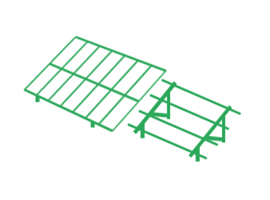
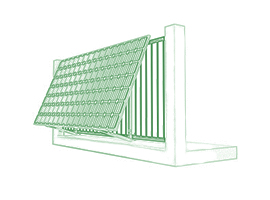
When discussing ground-mounted photovoltaic (PV) projects, many people first think of ground screw foundations or concrete foundation as the installation base.
However, many overlook a more economical and convenient foundation solution: gabion .
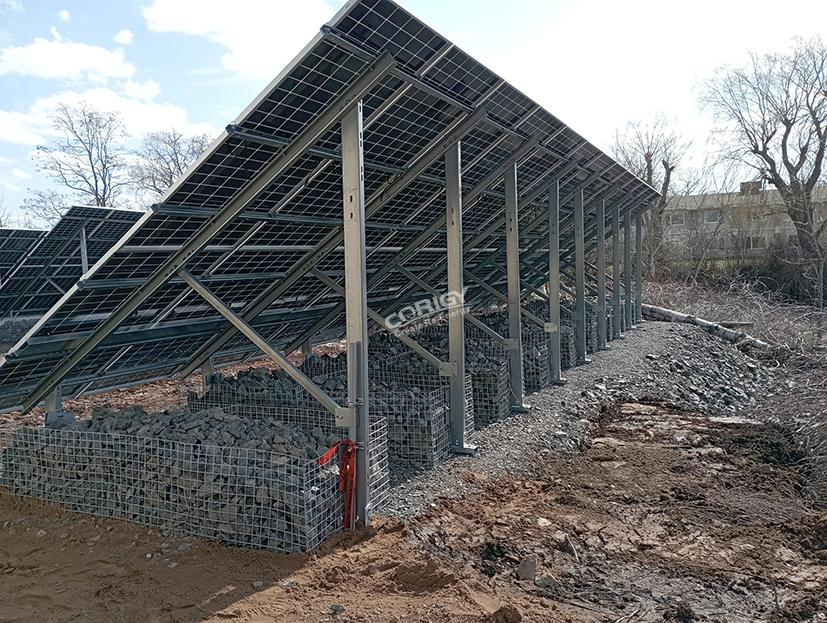
Gabion (also known as stone cage) ground-mounted PV systems use metal mesh cages filled with stones as a counterweight foundation to fix the PV supports to the ground.
This method has significant advantages in projects with special geological conditions and high environmental requirements:
1. No excavation or foundation damage required & Preserves existing terrain: Unlike traditional cast-in-place concrete pile or helical pile foundations, gabion mesh counterweights do not require large-scale excavation or damage to the soil structure, making them ideal for landfills, brownfields (contaminated land), or ecological reserves.
2. High adaptability: Can be deployed directly in rocky areas, hard ground, or areas where drilling is impossible.
3.Convenient and flexible construction & Rapid installation: Gabion mesh can be prefabricated or filled on-site, reducing the waiting time required for concrete curing and significantly shortening the construction period.
4. Mobility: If the power station needs to be relocated or the land lease expires, the gabion foundation is easy to dismantle, generating almost no construction waste.
5. Excellent Drainage and Ventilation & Performance: Prevention of Water Accumulation: The gaps between the stones have excellent permeability, unlike concrete foundations which impede rainwater penetration, effectively reducing site drainage pressure.
6. Natural Cooling: Good air circulation helps dissipate heat from the bottom of the modules, theoretically improving the power generation efficiency of photovoltaic modules in high-temperature environments.
7. Economic and Environmental Costs: Local Material Sources: If waste rock or gravel resources are available at or near the project site, material transportation costs can be significantly reduced.
8. Low Carbon Footprint: Using natural stone as ballast is more environmentally friendly than concrete, which emits large amounts of carbon dioxide during production.
9. High Stability and Durability: Wind and Slip Resistance: The large volume and weight of the gabion baskets provide excellent wind uplift resistance.
10. Structural Flexibility: Compared to rigid concrete foundations, it better adapts to minor foundation settlement or surface deformation and is less prone to cracking.
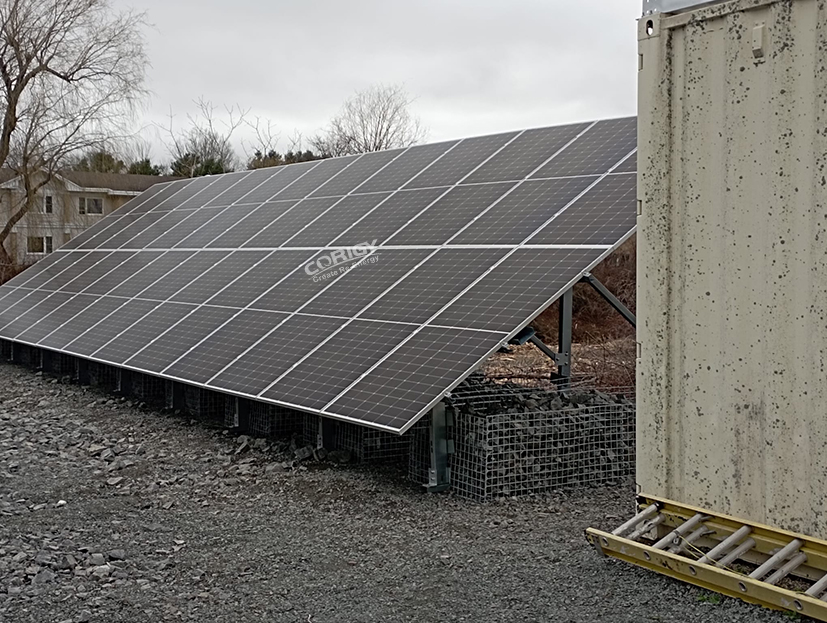
Corigy Solar Ground Mounting Racking System Structure is widely applied for landfll, open space or sloping terrain, etc, Diferent kinds of material can be offered for any needs, such as galvanized steel, anodized aluminum and ZAM materials.
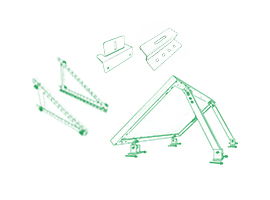
Flat roof solar mounting systems offer robust support and easy installation for solar panels on flat roofs. These systems ensure maximum energy capture, durability, and cost-efficiency, making them ideal for residential and commercial properties. Corigy flat roof solar panel mounting system, such as ballast mount, east-west ballast mount, etc. Contact us to learn more!
Install solar panel on the metal roof by standing seam, klip-lok, L foot or other clamps.
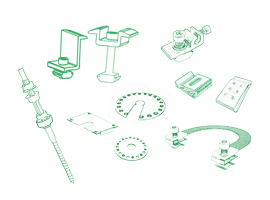
Solar mounting accessories such as end/mid clamp, cable clip, grounding items, etc.

CORIGY SOLAR, 15 years experience of research, manufacture and sale of solar energy system. We are always trying to provide the best support for you, including fast response, cost, QC, design, distributor support.
Phone
0086-592-6883200Location
No.893,Haicang Avenue,Haicang District,Xiamen City,China.

 IPv6 network supported
 English
 español
 한국의
한국의