-
What should be noted when installing solar mounting system on a flat roof?
Apr 21 , 2026
The application field of flat roof photovoltaic support system is wide, covering multiple fields such as residential buildings, commercial buildings, industrial plants, etc. Among them, residential buildings have become the main source of demand for flat roof photovoltaic support systems due to their huge market demand and vast market space, accounting for about 40% of the market share. Faced with...
Read More
-
Corigy Solar Completes Production and Shipment of Aluminum Solar Mounting Triangles
Sep 01 , 2026
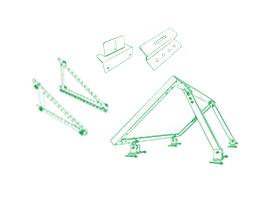
Recently, Corigy Solar successfully completed the production, inspection and packaging of a batch of aluminum solar mounting triangles, which are now ready for shipment to the customer. Aluminum mounting components are widely used in solar mounting systems due to their light weight, corrosion resistance and ease of installation. Based on different project requirements, Corigy can provide correspon...
Read More
-
Corigy Ground Screw Base Introduction
Sep 22 , 2026
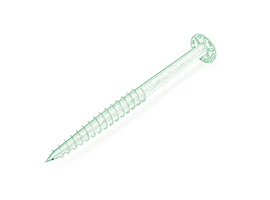
Our solar PV ground mount system consists of solar panel base, brackets and ground screws. It replaces concrete foundations with fast installation and no vegetation damage. Made of high-strength aluminum alloy or hot-dip galvanized steel, the system features good corrosion, wind and snow resistance. Modular design enables quick on-site assembly with adjustable tilt to maximize power output. With 1...
Read More
-
How to choose the anti-corrosion solution for photovoltaic brackets?
Oct 20 , 2026
The photovoltaic bracket industry uniformly adopts ISO 12944 atmospheric cohesiveness classification (C1 – CX) as the grading basis, and then deducts the coating thickness and process according to the material (carbon steel/aluminum alloy/fastener). The selection logic is: first determine the level based on the on-site environment, and then match the anti-corrosion plan according to the mater...
Read More
-
HDPE or PP for Solar Ballast Systems? The Answer May Not Be as Simple as You Think
Nov 03 , 2026
Recently, we had an interesting discussion with a customer in Canada about the material selection for solar plastic ballast blocks. Their concern was understandable: With temperatures ranging from -40°C to +50°C, how can we ensure the long-term durability of plastic ballast systems? Should we choose HDPE instead of PP? Both materials have their advantages, but the comparison goes beyond their name...
Read More