For island and coastal PV projects, wind load is only part of the challenge.
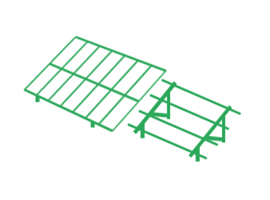
Last month, we received an inquiry from an Indonesian customer for a ground-mounted carbon steel solar mounting system.
During the project evaluation, we found that the site was located in an island area, very close to the coastline, with relatively low terrain.
For projects like this, many teams usually focus first on one key factor:
“What is the design wind speed?”
However, for coastal solar projects, there are several other critical factors that directly affect the long-term reliability of the mounting structure.
Here are some key points we always evaluate:
Coastal and island areas are often exposed to stronger wind conditions due to:
· Open terrain;
· Seasonal monsoon;
· Typhoon risks;
· Limited surrounding protection.
Therefore, during the design stage, it is important to confirm:
a. Local design wind speed;
b. Applicable design standard (ASCE, Eurocode, or local codes);
c. Terrain category and site exposure conditions.
Coastal environments usually involve:
·High humidity;
·Strong salt spray;
·Accelerated corrosion conditions.
In many coastal areas, the environmental corrosion category can reach C4-C5, and even C5-M (marine environment).
For these conditions:
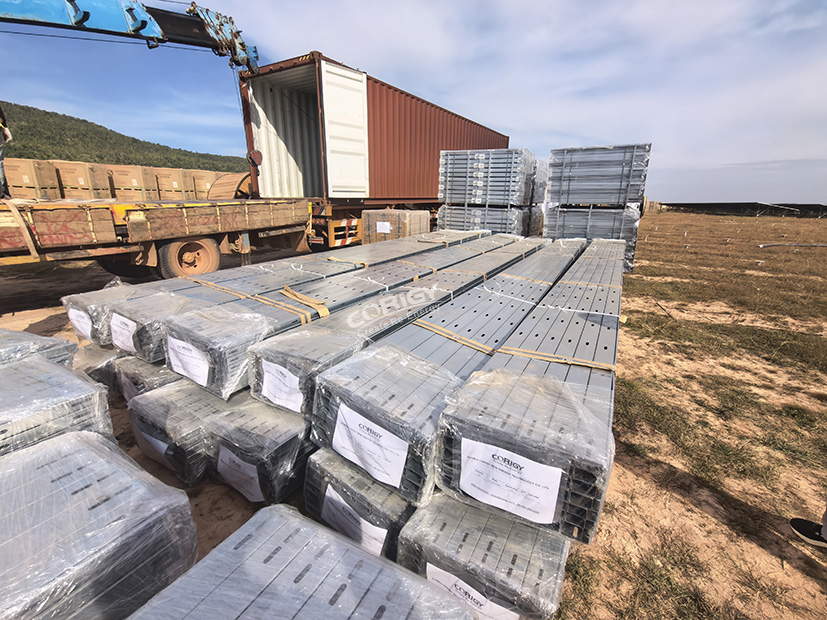
1) Carbon steel structures are usually recommended with hot-dip galvanizing ≥80μm.
For projects requiring higher durability, or where the budget allows, 100μm+ galvanizing thickness can provide additional protection.
Another advanced option is:
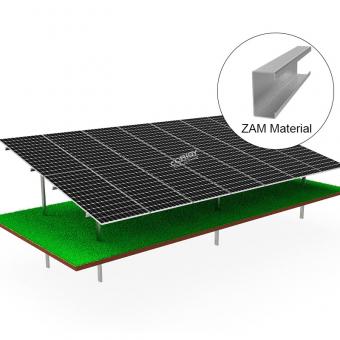
2) S350GD steel with ZAM450 (Zinc-Aluminum-Magnesium coating), which offers excellent corrosion resistance for challenging environments.
Besides wind load and corrosion protection, several site conditions should also be carefully reviewed:
a. How far is the project site from the coastline?
b. What is the site elevation above sea level?
c. Has the area experienced tidal flooding, seawater intrusion, or seasonal water accumulation?
d. Is the project located on reclaimed land, coral sand, or low-lying coastal terrain?
e. Is there a geotechnical investigation report available?
f. Has the project owner or utility company provided the final layout and ground elevation information?
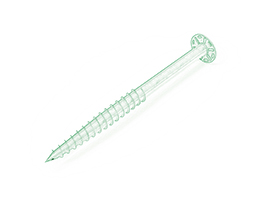
g. What type of foundation will be used — concrete foundation or ground screws?
One more important reminder:
If concrete foundations are used, salt-contaminated sea sand should never be used, as it may accelerate reinforcement corrosion and affect the long-term durability of the foundation.
A reliable solar mounting system is not only about structural strength.
It is about understanding the project environment, selecting the right materials, and paying attention to every engineering detail.
At Corigy Solar, we have been dedicated to solar mounting systems for more than 10 years.
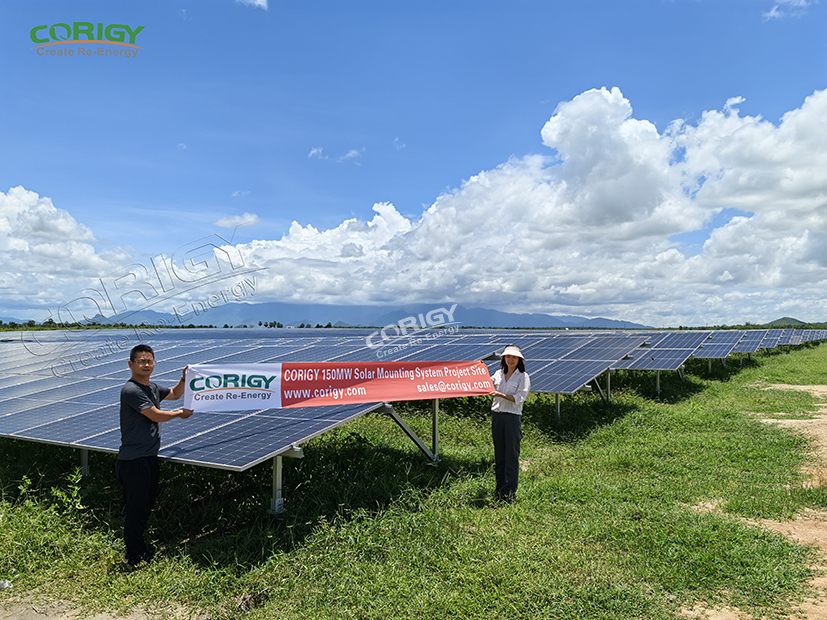
Whether it is a MW-scale ground-mounted project or a large commercial PV application, we believe:
Engineering starts with details.
Reliable solar structures are built through every decision made before installation.
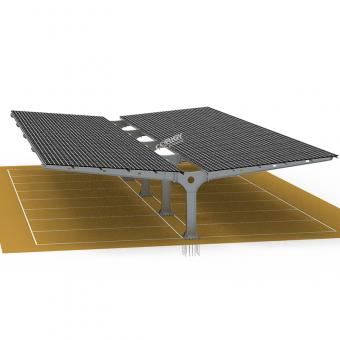
Corigy Solar Ground Mounting Racking System Structure is widely applied for landfll, open space or sloping terrain, etc, Diferent kinds of material can be offered for any needs, such as galvanized steel, anodized aluminum and ZAM materials.
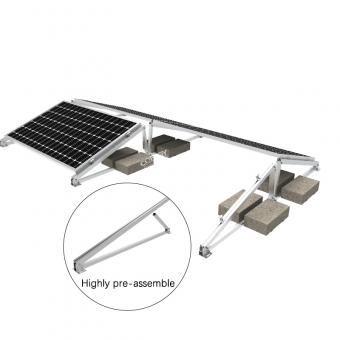
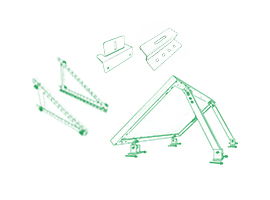
Flat roof solar mounting systems offer robust support and easy installation for solar panels on flat roofs. These systems ensure maximum energy capture, durability, and cost-efficiency, making them ideal for residential and commercial properties. Corigy flat roof solar panel mounting system, such as ballast mount, east-west ballast mount, etc. Contact us to learn more!
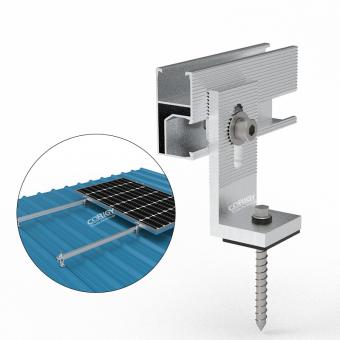
Install solar panel on the metal roof by standing seam, klip-lok, L foot or other clamps.
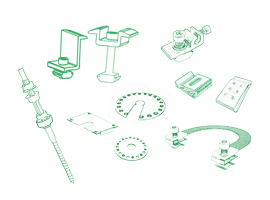
Solar mounting accessories such as end/mid clamp, cable clip, grounding items, etc.

CORIGY SOLAR, 15 years experience of research, manufacture and sale of solar energy system. We are always trying to provide the best support for you, including fast response, cost, QC, design, distributor support.
Phone
0086-592-6883200Location
No.893,Haicang Avenue,Haicang District,Xiamen City,China.

 IPv6 network supported
 English
 español
 한국의
한국의