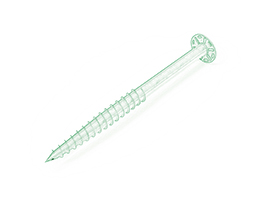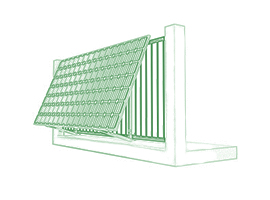
Recently, a client from Thailand asked an interesting question during our discussion about solar mounting systems “How thick should the galvanization and pipe wall of a ground screw be to ensure a long service life?”
This is actually a very important topic for solar ground mounting projects, especially in regions with different soil conditions and climates. Here are a few key factors that determine the durability of solar ground screws.
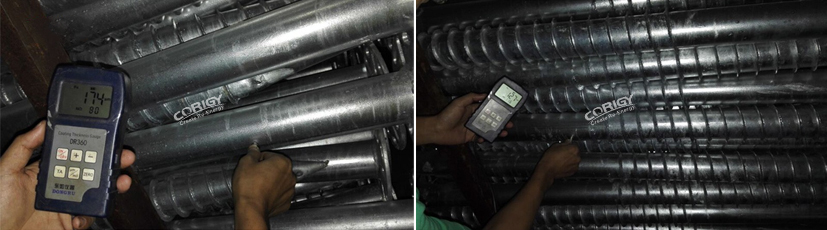
1. Hot-Dip Galvanization Thickness
For solar mounting ground screws, hot-dip galvanization is essential to prevent corrosion.
Typical standards in the industry:
≥ 80 μm – Standard protection for most normal environments
≥ 100 μm – Recommended for coastal or humid areas
≥ 120 μm – Suitable for highly corrosive environments
In general, 80–100 μm galvanization can provide 25–40 years (or even longer) of corrosion protection under normal soil conditions. However, the actual lifespan also depends heavily on soil chemistry and drainage conditions.
2. Pipe Wall Thickness of the Ground Screw
The wall thickness of the steel pipe affects both structural strength and long-term durability. Common specifications used in solar projects is diameter typical wall Thickness60 mm2.5–3.5 mm76 mm3.0–4.0 mm89 mm3.5–4.5 mm
For large solar plants or areas with high wind loads, thicker walls are usually recommended.
3. Soil Conditions Matter
The soil environment can significantly influence corrosion speed.
Normal soil (neutral pH) : Standard galvanization usually works well.
Clay or wet soil: Higher galvanization thickness recommended.
Salty or coastal soil : Thicker galvanization + larger safety factor.
Rocky soil : Focus more on structural strength than corrosion.
4. Installation and Drainage
Even a well-designed ground screw can fail prematurely if installation conditions are poor. Key recommendations is
● Avoid long-term water accumulation.
● Ensure proper drainage around the foundation.
● Select the correct screw length based on soil conditions.
● Follow installation torque recommendations.
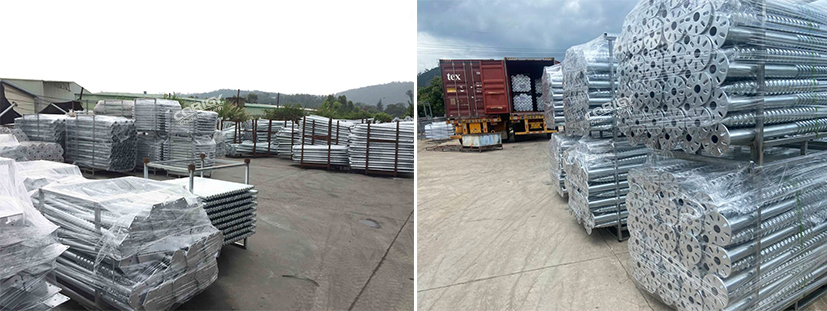
5. Why Ground Screws Are Widely Used in Solar Projects
Compared with traditional concrete foundations, ground screws offer several advantages:
● Faster installation.
● No concrete curing time.
● Environmentally friendly.
● Easy removal and recycling.
● Suitable for most soil types.
This is why they are increasingly popular in utility-scale solar farms and commercial PV installations.
The service life of a solar ground screw is not determined by a single factor. It depends on galvanization thickness, pipe wall thickness, soil conditions, and proper installation.In our recent solar projects, we typically recommend 80–100μm hot-dip galvanization for ground screws, depending on the soil environment and project lifetime requirements.Proper material selection and corrosion protection are essential to ensure that the foundation can match the 25+ year lifespan of a solar power plant.
Feel Free to contact us if you want to have your suitable ground screw.
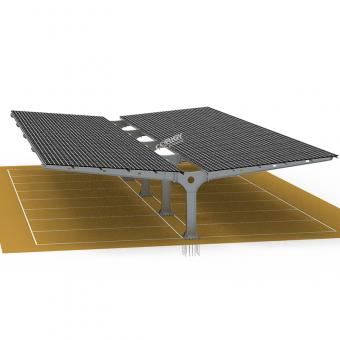
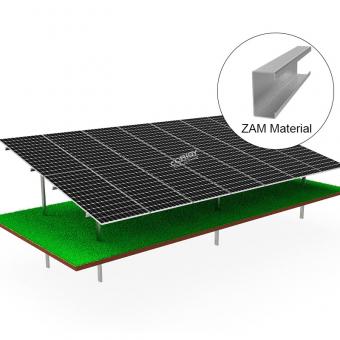
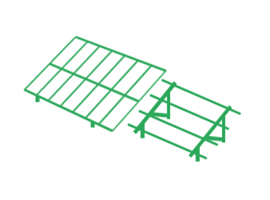
Corigy Solar Ground Mounting Racking System Structure is widely applied for landfll, open space or sloping terrain, etc, Diferent kinds of material can be offered for any needs, such as galvanized steel, anodized aluminum and ZAM materials.
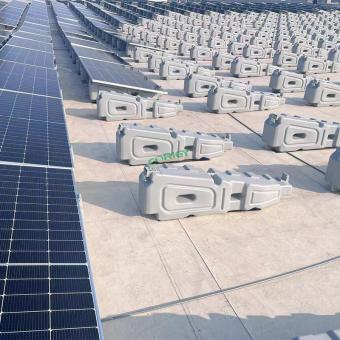
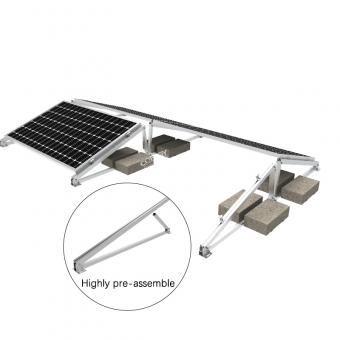
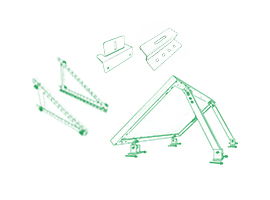
Flat roof solar mounting systems offer robust support and easy installation for solar panels on flat roofs. These systems ensure maximum energy capture, durability, and cost-efficiency, making them ideal for residential and commercial properties. Corigy flat roof solar panel mounting system, such as ballast mount, east-west ballast mount, etc. Contact us to learn more!
Install solar panel on the metal roof by standing seam, klip-lok, L foot or other clamps.
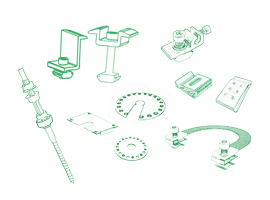
Solar mounting accessories such as end/mid clamp, cable clip, grounding items, etc.

CORIGY SOLAR, 15 years experience of research, manufacture and sale of solar energy system. We are always trying to provide the best support for you, including fast response, cost, QC, design, distributor support.
Phone
0086-592-6883200Location
No.893,Haicang Avenue,Haicang District,Xiamen City,China.

 IPv6 network supported
 English
 español
 한국의
한국의