As the core of the power station, the life of the inverter affects the normal operation of the entire power station. The life of the inverter has become a problem that everyone is very concerned about. So what are the factors that affect the life of the inverter? Temperature is one of the important factors affecting the life of the inverter, especially for components such as electrolytic capacitors and optocouplers. For every 10°C increase in temperature, the life of electrolytic capacitors is reduced by half. Excessive temperature will also accelerate the light wane of optocouplers. When the relay is switched at zero current, its life is 1 million times. However, as the current increases during switching, the life is almost exponentially attenuated. Precise software control makes the relay switch at zero current, which is the key factor to ensure the life of the relay. The working environment of the inverter is generally poor. And there are many interference factors, such as poor power grid quality, large local inductive load, etc. If the inverter protection function and EMC design are not good, it is easy to be disturbed by the outside world. Once the IGBT If the drive is disturbed, it is easy to cause it to misconnect and cause the machine to explode. Although the string inverter has an IP65 protection level and can be installed both indoors and outdoors. But the installation environment also has a great impact on the life of the inverter. If the inverter is installed in an environment with direct sunlight, humidity, and high pH, the life of the inverter will be shortened. And in an environment exposed to the sun, it will easily cause the inverter to overheat and reduce the load, which will affect the power generation. Therefore, choosing a suitable installation environment is also a key factor to ensure the life of the inverter. Corigy’s inverter has the characteristics of long life, safety and stability. Inquire is welcome. CORIGY SOLAR more professional and flexible solar mounting solutions waiting for you here! CONTACT US! Above news from CORIGY SOLAR Sales & Marketing department Phone: +0086-592-6883200 E-mail: sales@corigy.com
Read MorePower storage battery is a important part of solar system. How to maintain the power storage battery? 1. Charging current Too large or too small charging current will affect the service life of the battery. 2. Charging voltage If the charging voltage is too high, the battery will easily lose water, heat and deform, otherwise the battery will be insufficiently charged and the charging voltage will be abnormal, which may be caused by the wrong configuration of the charger, or caused by the fault of the charger. 3. DOD depth of discharge During the use of the battery, the percentage of the capacity released by the battery to its rated capacity is called the depth of discharge (DOD). The depth of discharge is closely related to the life of the battery. The deeper the depth of discharge, the shorter the charging life. Therefore, deep discharge should be avoided as much as possible during use. The battery discharge depth is about 10% to 30% is shallow cycle discharge. The discharge depth is about 40% to 70% is medium cycle discharge. And the discharge depth is about 80% to 90% is deep cycle discharge. Generally speaking, the deeper the daily discharge depth of the long-term operation of the battery, the shorter the battery life, and the shallower the discharge depth, the longer the battery life. Shallow cycle discharge is beneficial to prolong battery life. The shallow cycle operation of the battery has two obvious advantages: first, the battery generally has a longer cycle life. Second, the battery often maintains more backup ampere-hour capacity, which makes the power supply guarantee rate of the photovoltaic system higher. According to actual operating experience, a more moderate depth of discharge is 60% to 70%. 4. Battery installation The battery should be installed in a clean, cool, ventilated and dry place as far as possible, and should be protected from the influence of sunlight, heaters, or other radiant heat sources. Batteries should be placed at attention and not tilted. The terminals between each battery should be firmly connected. 5. The environment temperature The temperature greatly affects the battery. If the temperature is too high, the battery will overcharge and generate gas. If the temperature is too low, the battery will not be charged enough, which will affect the service life of the battery. Therefore, the temperature of about 25℃ is the best. 6. Regular maintenance The battery should be checked regularly after a certain period of use, such as observing whether its appearance is abnormal, measuring whether the voltage of each battery is average, etc. If there is no power outage for a long time, the battery will always be in a charged state, which will deteriorate the activity of the battery. Therefore, even if the power is not outaged, it is necessary to conduct regular discharge tests to keep the battery active. The discharge test can generally be carried out once every three months. The method is that the inverter is loaded, pr...
Read MoreThe impact of lightning on solar inverter is divided into two types: "Direct Lightning Flash" and "Indirect Lightning Flash". "Direct Lightning Flash" means that the inverter is directly struck by lightning. "Indirect Lightning Flash" means that when a nearby lightning strike occurs, the electric energy generated by the lightning strike is conducted through the transmission lines and grounding wires in the photovoltaic power system. And a voltage far exceeding the rated level is applied to the power generation equipment, thereby causing damage to the equipment. Regarding direct lightning flash, it can basically be avoided by reducing the height of the photovoltaic system from the ground during design. The MW-level photovoltaic power station with low ground height has almost never been struck by lightning, and it can be said that a direct lightning strike will hardly affect it. However, photovoltaic power plants in mountainous areas and other places may still be struck by lightning. At this time, it is necessary to take measures to install lightning rods or lightning conductors around the solar panels. In terms of direct lightning flash, lightning that falls on buildings or the ground near the photovoltaic power station will cause the electric potential of the grounding part of the power generation equipment to rise. Electric potential can cause transient abnormally high voltages - surge voltages in main circuits of the power generation equipment such as the Power Control System. This voltage can damage the insulation within the power generating equipment, causing damage to the equipment. As a countermeasure, the junction box and Power Control System are generally equipped with a Surge Protective Device (SPD) that responds to intrusion induced lightning surge voltages. SPD uses a mechanism that short-circuits occur when a voltage above a certain level is applied to prevent damage to power generation equipment. In addition, the communication of monitors for remote monitoring generally uses optical cables instead of metal cables that are easily affected by lightning strikes. CORIGY SOLAR more efficient and flexible solar mounting solutions waiting for you here! CONTACT US! Above news from CORIGY SOLAR Sales & Marketing department Phone: +0086-592-6883200 E-mail: sales@corigy.com
Read MoreThe life of the inverter is determined by the quality of the product, the installation and use environment, and the later operation and maintenance. So how to improve the service life of the inverter through correct installation and later operation and maintenance? The main factors affecting the service life of the inverter are: 1. The internal temperature of the inverter. The temperature inside the inverter is the most important factor affecting the life of the inverter. Too high temperature will reduce the performance and life of the components. The capacitor inside the inverter is a key factor affecting the life of the inverter. The inverter itself is a heat source. The power modules, inductors, switches, cables and other circuits inside will generate heat. All the heat must be dissipated in time, otherwise the internal temperature will rise higher and higher. Therefore, the heat dissipation design of the inverter is a key link in the product development and design. At present, the inverter industry basically adopts natural cooling and air cooling. Low-power models are mainly use natural cooling, and medium and high-power models are basically use air-cooled. Corigy’s has both of those type. In order to ensure the stability of the internal temperature of the inverter, in addition to product design considerations, special attention should be paid to the following matters during installation and use. ①The inverter must be installed in a well-ventilated space with good ventilation to the outside world. If it must be installed in a closed space, an air duct and exhaust fan must be installed, or an air conditioner. It is strictly forbidden to install the inverter in a closed box. ②The installation location of the inverter should avoid direct sunlight as much as possible. If the inverter is installed outdoors, it is best to install it under the eaves on the back side or under the solar modules. There are eaves or modules above the inverter to block it. If it can only be installed in an open place, it is recommended to install a sunshade and rain shelter above the inverter. ③Install the inverter as far away as possible from high-temperature areas such as boilers, fuel-fired hot air blowers, heating pipes, and air-conditioning outdoor air outlets. 2. The input voltage and current parameters of the inverter. Improper matching of the input voltage and current parameters of the inverter will also affect the life of the inverter. The higher the voltage or current that the components inside the inverter are subjected to, the shorter the life of the components. For this reason, when we design the capacity ratio, in addition to considering the economic factors, we must also fully consider the life factor of the inverter. 3. The external environment for the inverter to operate. The external environment in which the inverter operates is also an important factor affecting the life of the inverter. At present, the protection level of string inverters on the ...
Read MoreAlthough lithium batteries have more advantages than other types of batteries, there is a danger of explosion when lithium batteries are in a severely overcharged state, which can cause damage to the lithium batteries and threaten the safety of users. Therefore, it is necessary to equip the lithium battery with a set of lithium battery management system to effectively monitor, protect, energy balance and fault alarm of the battery pack, thereby improving the working efficiency and service life of the entire lithium battery. What is BMS? BMS is the abbreviation of Battery Management System. It is a system for battery management. It usually has the function of measuring battery voltage to prevent or avoid abnormal conditions such as battery over-discharge, over-charge, and over-temperature. The functions of BMS 1. Battery overcharge, over discharge, over temperature, over current, and short circuit protection. Once the voltage of any battery exceeds 4.2V or the voltage of any battery is lower than 3.0V, the system will automatically cut off the charging or discharging circuit. If the battery temperature exceeds the battery operating temperature or the current is greater than the battery discharge current, the system will automatically cut off the current path to ensure the safety of the battery and the system. 2. Energy balance. The entire battery pack consists of many batteries in series. After a certain period of operation, due to the inconsistency of the battery cell itself, the inconsistency of the operating temperature and other reasons, it will eventually show a big difference, which will affect the life of the battery and the use of the system. Energy balance is to make up for the differences between the individual cells to do some active or passive charging or discharging management to ensure the consistency of the battery and prolong the life of the battery. As a powerful guarantee for the safe use of batteries, BMS makes the battery in a safe and controllable charging and discharging process at all times, greatly improving the cycle life of the battery in actual use. Corigy Battery all configure with BMS to monitor the voltage, temperature and SOC, etc. CORIGY SOLAR more efficient and flexible solar mounting solutions waiting for you here! CONTACT US! Above news from CORIGY SOLAR Sales & Marketing department Phone: +0086-592-6883200 E-mail: sales@corigy.com
Read MoreAfrica is a concentrated growth area of off-grid power storage system, and it is expected that the African off-grid power storage system market will usher in vigorous development in the next five years. In fact, the African PV market is naturally attractive. The region is rich in solar energy resources, 3/4 of the land can receive vertical sunlight. The availability of solar power generation is very high and the potential is huge. It is understood that the current level of electricity development in Africa is low. According to data, the electricity consumption per capita is only 200 kWh. And many countries are even lower than 100 kWh. About 600 million people are still without electricity. Large-scale photovoltaic ground-based power stations can supplement the insufficient power supply of the local grid, and off-grid power storage system can break the shackles of no power facilities and support local basic domestic electricity. In addition, off-grid power storage system can also serve small and medium-sized enterprises. In fact, the development of renewable energy is becoming a trend in Africa. The photovoltaic market is most promising in northern Africa and southern Africa. Many countries have introduced relevant policies to encourage the development of clean energy. For example, Egypt and Kenya focus on the development of new energy industries and encourage investment in public-private partnerships; foreign companies are encouraged to invest in photovoltaic energy fields; the Nigerian government is currently committed to promoting the privatization reform of power companies, which is very attractive in terms of investment incentives. Kenya, Tanzania and Ethiopia together account for more than 60% of the off-grid photovoltaic market share in sub-Saharan Africa. Among them, more than 30% of Kenya's population use off-grid photovoltaic products. In 2022, Corigy has provided more than 3MW of off-grid systems for many countries on the African continent, such as Sierra Leone, Ghana, Congo, Nigeria, Kenya, etc. In 2021, we seek to partner with more and more companies to provide our off-grid system on the African continent. CORIGY SOLAR more professional and complete power storage solutions waiting for you here! CONTACT US! Above news from CORIGY SOLAR Sales & Marketing department Phone: +0086-592-6883200 E-mail: sales@corigy.com
Read MoreCorigy Solar Ground Mounting Racking System Structure is widely applied for landfll, open space or sloping terrain, etc, Diferent kinds of material can be offered for any needs, such as galvanized steel, anodized aluminum and ZAM materials.
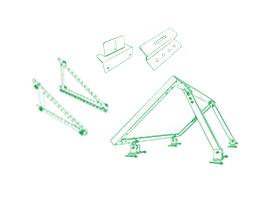
Flat roof solar mounting systems offer robust support and easy installation for solar panels on flat roofs. These systems ensure maximum energy capture, durability, and cost-efficiency, making them ideal for residential and commercial properties. Corigy flat roof solar panel mounting system, such as ballast mount, east-west ballast mount, etc. Contact us to learn more!
Install solar panel on the metal roof by standing seam, klip-lok, L foot or other clamps.
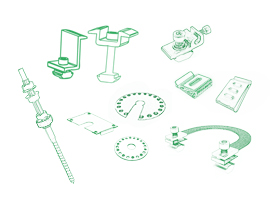
Solar mounting accessories such as end/mid clamp, cable clip, grounding items, etc.

CORIGY SOLAR, 15 years experience of research, manufacture and sale of solar energy system. We are always trying to provide the best support for you, including fast response, cost, QC, design, distributor support.
Phone
0086-592-6883200Location
No.893,Haicang Avenue,Haicang District,Xiamen City,China.

 IPv6 network supported
 English
 español
 한국의