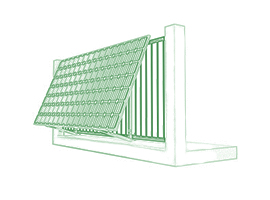
Snow load is the governing load for photovoltaic power stations located in frigid zones, high-altitude regions and northern areas in winter. Compared with wind load, snow load exerts more destructive impacts on supports. Unlike wind load which acts instantaneously, snow load is a long-term static load that bears on solar ground mount system and modules for days or even months. It causes multi-dimensional damages to structures, joint connections, foundations and overall anti-overturning performance, thereby triggering malfunctions such as structural deformation, collapse and module breakage. Combined with various solar mountings scenarios including flat ground, sloped terrain and flat rooftops, the specific impacts are elaborated as follows:
I. Uniform Snow Cover: Causing Overall Plastic Deformation and Fatigue Damage of Supports
Large-area evenly distributed snow imposes sustained and uniform vertical pressure on photovoltaic arrays, representing the most fundamental and prevalent form of snow load action.
Deflection Deformation of Main and Secondary Beams When support crossbeams and guide rails bear snow weight over a long period, permanent downward bending that cannot restore the original flat state will occur if the section size of profiles is too small, wall thickness is insufficient or span length is excessive. Deformation leads to uneven stress on modules, making the glass prone to micro cracks. Meanwhile, the original inclination angle of photovoltaic panels is altered, weakening drainage and snow removal capacity and creating a vicious cycle of snow accumulation.
Accumulated Structural Fatigue Alternating loads from repeated snow accumulation and snowmelt in winter keep support profiles under persistent tension and compression, resulting in fatigue damage. After long-term operation, the overall rigidity of supports declines and stability deteriorates continuously, with structural loss far greater than that in snow-free regions with mild temperatures.
Verticality Deviation of Supports Sustained compressive force on vertical columns triggers slight tilting and settlement, disrupting the overall flatness of arrays. This indirectly impairs subsequent wind and seismic resistance and reduces the overall stability of the power station.
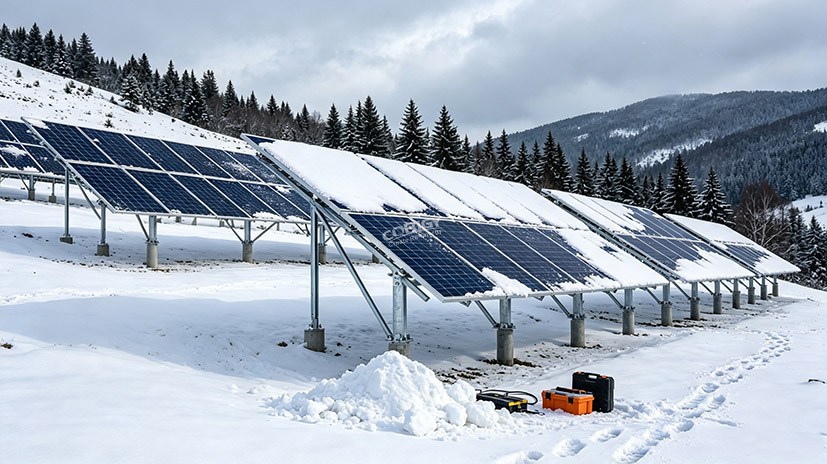
II. Uneven Snow Cover Inducing Eccentric Stress and Torsion-Shear Structural Failure
This constitutes the primary inducement of damage for mountain-slope supports, steep-inclination supports and rear-row supports shaded by obstructions, as well as the core cause of snow-load collapse accidents. Uneven snow distribution driven by gravity, wind direction and shading generates eccentric loads and breaks the stress balance of supports.
Unilateral Eccentric Compression Shading from buildings or trees and inconsistent panel inclination lead to thick snow on one side of a single row of supports and bare surfaces on the other side, generating massive eccentric bending moments. Support crossbeams and vertical columns endure combined torsional and shear stress, making profile distortion and bending highly likely.
Overloading from Snow Piled at Head and Tail Sections Loose snow tends to accumulate at both ends of arrays and height difference positions of supports, with local loads far exceeding design criteria. This results in overloading collapse of single-span supports and further triggers cascading overturning of the entire array.
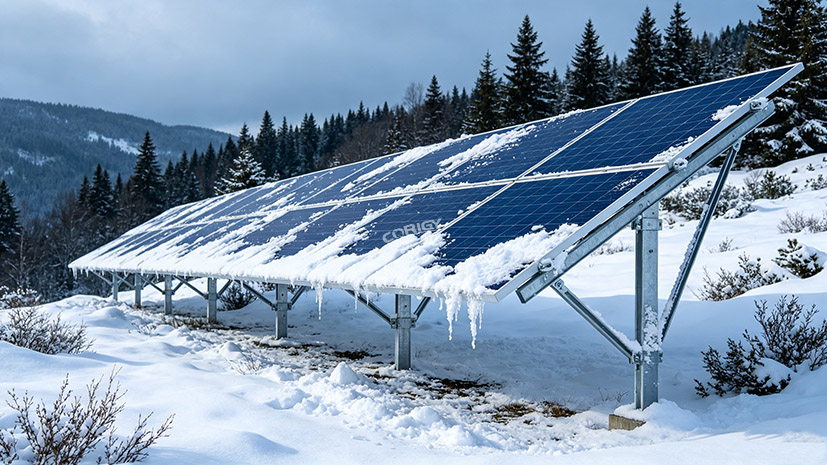
We can design supports with appropriate inclination angles to facilitate natural snow shedding. Meanwhile, snow removal clips can be mounted on photovoltaic modules to assist with snow clearance
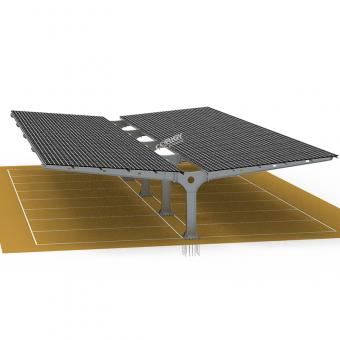
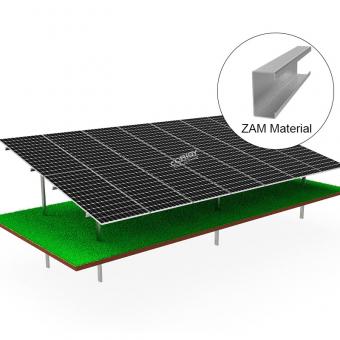
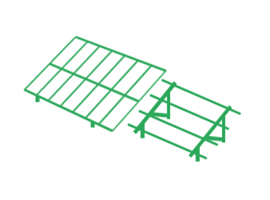
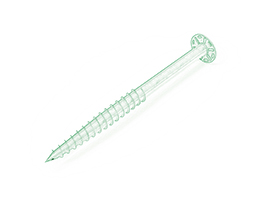
Corigy Solar Ground Mounting Racking System Structure is widely applied for landfll, open space or sloping terrain, etc, Diferent kinds of material can be offered for any needs, such as galvanized steel, anodized aluminum and ZAM materials.
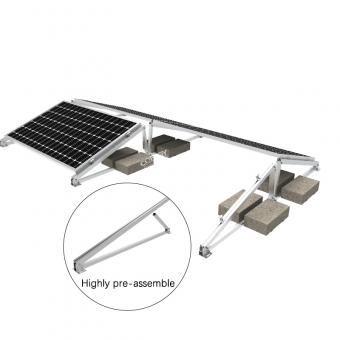
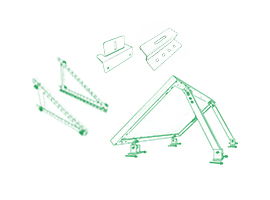
Flat roof solar mounting systems offer robust support and easy installation for solar panels on flat roofs. These systems ensure maximum energy capture, durability, and cost-efficiency, making them ideal for residential and commercial properties. Corigy flat roof solar panel mounting system, such as ballast mount, east-west ballast mount, etc. Contact us to learn more!
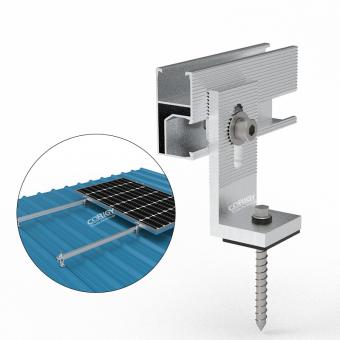
Install solar panel on the metal roof by standing seam, klip-lok, L foot or other clamps.
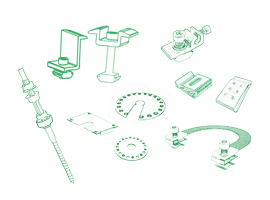
Solar mounting accessories such as end/mid clamp, cable clip, grounding items, etc.

CORIGY SOLAR, 15 years experience of research, manufacture and sale of solar energy system. We are always trying to provide the best support for you, including fast response, cost, QC, design, distributor support.
Phone
0086-592-6883200Location
No.893,Haicang Avenue,Haicang District,Xiamen City,China.

 IPv6 network supported
 English
 español
 한국의
한국의