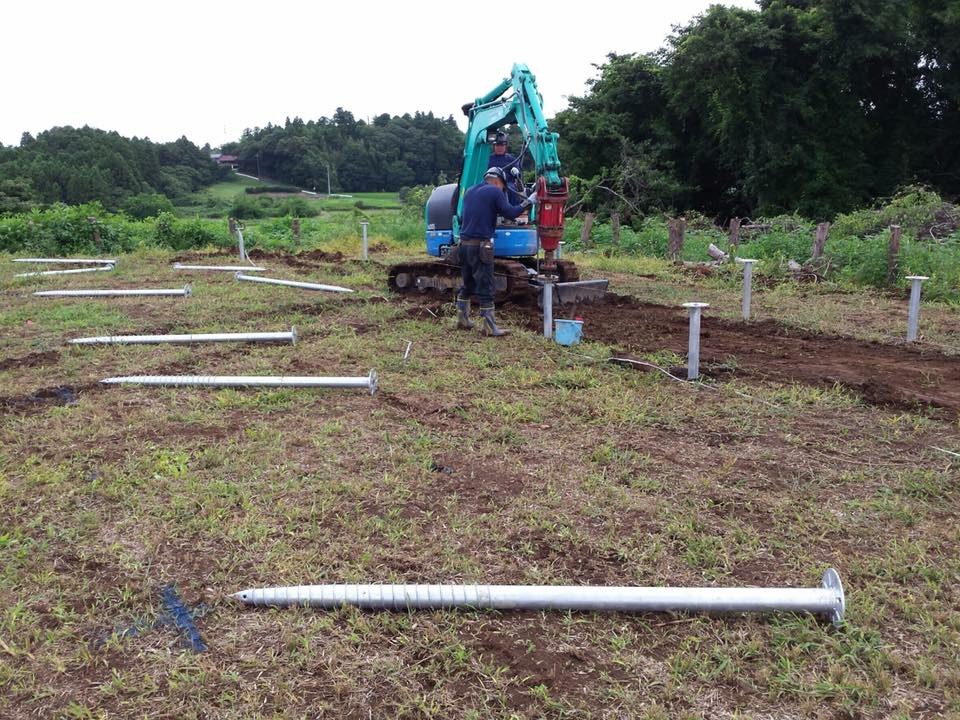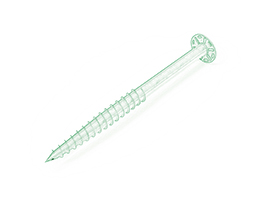
With the reduction of the price of photovoltaic modules in the photovoltaic market, the price of the entire system should also be reduced as much as possible. This also puts forward corresponding requirements for the installation of solar mounting system, that is, it is fast to reduce working hours and environmental protection. In the power station project, the foundation part bears the brunt. First, it is in contact with the soil and solarbracket, which has the greatest impact on the vegetation of the environment. Second, this part is the first step of installation. Only when the foundation is completely stable can it be installed. Traditional ground power station foundations are mostly concrete foundations, but concrete foundations have many constraints. 1.A curing time is required after the concrete is poured. After the concrete is poured, if the climate is hot and the air is dry, if the maintenance is not carried out in time, the water in the concrete will evaporate too quickly, resulting in a dehydration phenomenon, which will make the cement particles that have formed a gel not fully hydrated and cannot be converted into stable crystalsandlack of sufficient adhesionresulting in flaky or powdery exfoliation on the concrete surface. In addition, when the concrete does not have sufficient strength, the premature evaporation of water will also cause large shrinkage deformation and dry shrinkage cracks, which will affect the durability and integrity of the concrete. 2.Using a concrete foundation requires a large amount of fresh water. Calculated according to the engineering volume of 1MW, estimated according to C20, about 1500 concrete independent foundations are required, and about 42m³ of water consumption is required according to the mixing ratio. Such projects, in arid areas such as deserts, will cause a great waste of water resources. 3.The use of concrete foundations requires a larger working surface, which will cause greater damage to the natural ground. The application of grounding screw can make up for the above shortcomings. 1.In the production process of grounding screw, the production line consists of blanking - high temperature heating - tube shrinking - spiral sheet production - spiral sheet welding - surface hot-dip galvanizing and other processes according to different specifications of screw pile models. We adopt fully automatic welding equipment for the welding of threaded pieces, which can effectively reduce the instability of the welding seam caused by manual welding, and improve the production efficiency. 2.During the installation process, the grounding screw is installed by a special piling machine, and the positioning and installation of a screw pile foundation can be completed in 3 minutes. For the 10MW screw pile foundation project, the entire project installation can be completed within 40 days. 3.After use, the screw pile can be pulled out for disposal and then recycled, so that the cost of materials and the pollution ...
Read MoreHybrid solar systems generate electric power in the similar way as a common grid-tie solar system. But it has special hybrid inverters and batteries to store energy for later use. This ability to store energy enables most hybrid systems to also operate as a backup power supply during a blackout, similar to a UPS system. The system consists of photovoltaic module,solar panel mounting structure, hybrid inverter, battery pack, load, etc. The photovoltaic array converts solar energy into electric energy under the condition of light, and supplies power to the load through the hybrid inverter, and charges the battery pack at the same time. When there is no light, the battery supplies power to the hybrid inverter , and then supplies AC load power supply. Compared with the grid-connected power generation system, the hybrid system adds charge and discharge controllers and batteries, and the system cost increases by about 30%, but the application range is wider. First, it can be set to output at rated power when the electricity price peaks to reduce electricity expenses. Second, it can be charged at the valley section of the electricity price, and discharged at the peak section, making use of the difference between the peak and valley price. Third, when the power grid is out of power, the photovoltaic system can be used as a backup power supply to continue When working, the inverter can be switched to the off-grid working mode, and the photovoltaic and battery can supply power to the load through the inverter. CORIGY SOLAR more professional and flexible solar mounting solutions waiting for you here!CONTACT US! Above news from CORIGY SOLAR Sales & Marketing department Phone: +0086-592-6883200 E-mail: sales@corigy.com
Read MoreAdvantages of off grid solar system 1. Freedom from the grid This is the main reason why people in blackout-prone regions are trend to use off-grid solar. When connected to the grid, you are dependent on an external supplier — the utility company — for all your power. When the grid shuts off, so does your power supply. But if you install off-grid solar system, it can separate your reliance to the grid. 2. Save Electric Bills The system can also allows you escape from the rapidly increasing price of the electricity. 3. Environmental friendly Going off-grid will reduces carbon emissions. Since most of the electricity supplied through the grid comes from burning fossil fuels. Solar energy is a renewable energy, it has not pollution when producing electricity. For households in areas without grid or frequent power outages, off-grid systems have strong practicality. However, the off-grid system must be equipped with a battery and occupy 30-50% of the cost of the power generation system. Economically, it is difficult to be widely used now. However, with the sharp reduction in the price of energy storage batteries and the diversification of energy storage system equipment, off grid solar systems will become more and more popular in the future. What Size Off Grid Solar System Do We Have? Corigy has design different size of off grid solar system for different family. We have 2-3KW for small family; 3.5-5KW for medium family; 10-15KW for large family use, etc. CORIGY SOLAR more professional and flexible solar mounting solutions waiting for you here!CONTACT US! Above news from CORIGY SOLAR Sales & Marketing department Phone: +0086-592-6883200 E-mail: sales@corigy.com
Read MoreGrid-tied solar system is the most popular type of home solar power system on the market now. It can generates power for the home. And if there have any excess power it will feeds into the grid. Corigy Grid-tie solar system consist of PV array, hybrid inverter, battery (Lithium iron phosphate or lead acid battery). It aims to store surplus energy in the battery and supply the load when needed. It’s also helpful in reducing your electricity bills and improving your energy independence. How it works? In the morning, solar power is higher than load requirement. It serves load and charges the battery at the same time. If excess energy is generated, it can be sold into mains grid. During the night when there is no sunshine, battery bank discharge power to supply the load. When there is a grid outage, the battery can be triggered to power the household applications continuously. Having a 4 milli-seconds automatic switch time, corigy residential energy storage system is able to ensure your electrical applications operation smoothly. Corigy hybrid inverter is also completely compatible with diesel generator. On Grid VS Off Grid The main advantage of a grid-tied solar system is that it has a shorter payback compared to the lifespan of an off-grid system. The average homeowner can expect to break even for the cost of a solar power system in about 8 – 10 years. The average lifespan of a solar panel system is greater than 25 years. This means that most homeowners can look forward to 15 or more years of earnings after breaking even on their investment. CORIGY SOLAR more professional and flexible solar mounting solutions waiting for you here!CONTACT US! Above news from CORIGY SOLAR Sales & Marketing department Phone: +0086-592-6883200 E-mail: sales@corigy.com
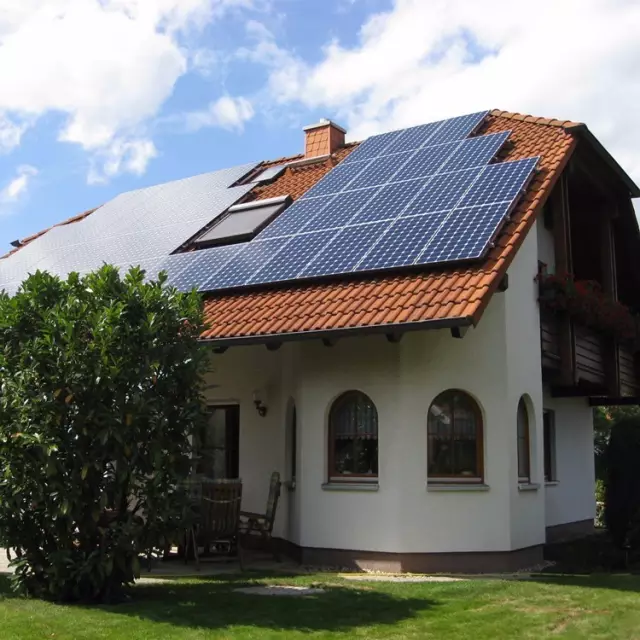
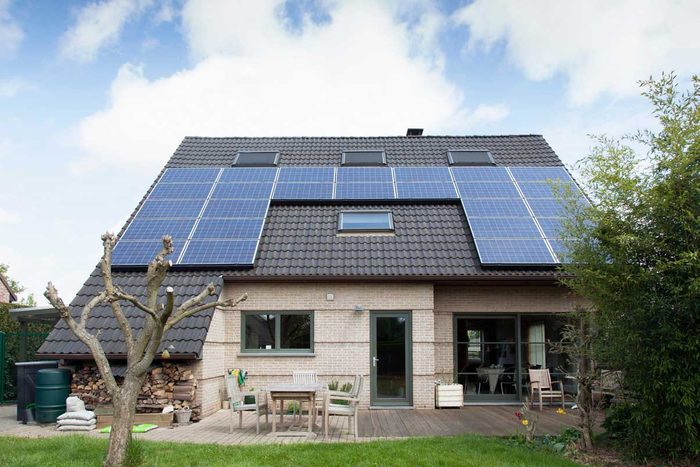
Read MoreThe grid tie solar power system is that the direct current generated by the solar modules is converted into alternating current that meets the requirements of the mains grid through an on-gird inverter and then directly connected to the public grid. It can be divided intogrid-tiesolarpowersystemwith and without batteries. The grid-tied solar systems with a battery is schedulable, and can be merged into or out of the grid as needed, and also has the function of a backup power supply. When the grid is powered off for some reason, it can supply power in an emergency. The grid-tied solar systems with a battery with a battery is often Installed in residential buildings.Grid-tied solar systems without batteries do not have the functions of dispatchability and backup power, and are generally installed on larger systems. Compared with independently operating solar photovoltaic power plants, integration into the grid can bring many benefits to photovoltaic power generation. 1.The battery is saved as energy storage; 2.The photovoltaic array can always run at the maximum power point, and the grid receives all the electricity generated by the solar energy, which improves the efficiency of solar power generation. 3.The power grid has gained benefits, and the distributed photovoltaic system can provide electricity for local users, easing the transmission and distribution burden of the power grid. 4.Photovoltaic modules are perfectly integrated with buildings, which can not only generate electricity but also be used as building materials and decorative materials. Corigy provides both grid-tie solar power system with and without batteries.Customized can choose the suitable product according to their need here. CORIGY SOLAR more professional and flexible solar mounting solutions waiting for you here!CONTACT US! Above news from CORIGY SOLAR Sales & Marketing department Phone: +0086-592-6883200 E-mail: sales@corigy.com
Read MoreOff-grid power is the harnessing of electricity independent of utilities, such as the electrical grid, through a renewable resource. Solar, wind, and hydro are three main methods of off-grid power production. Benefits of off-grid power system 1.Energy independence. You don't need to tapping into the nearest grid and paying the power company each month. 2. Environmental. It nearly has not non-existent carbon footprint. 3. Suitable for plateaus, island, remote mountainous areas and filed operations where the environment is harsh. Benefits of off-grid solar energy system Solar is most practical in the three main types of off-grid energy. Because fewest special working conditions is needed. Most places in the world qualify with solar energy. Solar power easier to obtain than wind and hydro power. And the cost of the solar energy system is more cheapest too. The solar power plants can also fastest recover the investment cost. If you're contemplating off-grid power for your house, solar energy system is a good choice. Welcome to contact us for your off-grid solar energy system. CORIGY SOLAR more professional and flexible solar mounting solutions waiting for you here! CONTACT US! Above news from CORIGY SOLAR Sales & Marketing department Phone: +0086-592-6883200 E-mail: sales@corigy.com
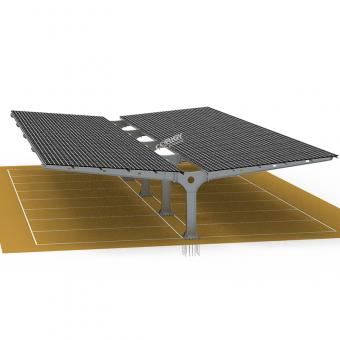
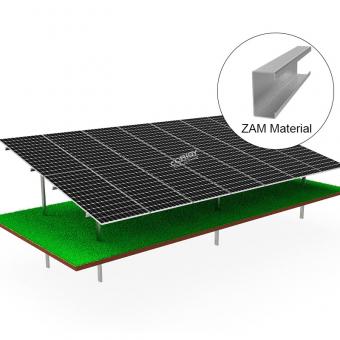
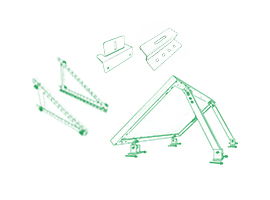
Read MoreCorigy Solar Ground Mounting Racking System Structure is widely applied for landfll, open space or sloping terrain, etc, Diferent kinds of material can be offered for any needs, such as galvanized steel, anodized aluminum and ZAM materials.
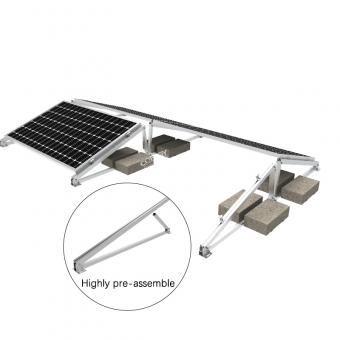
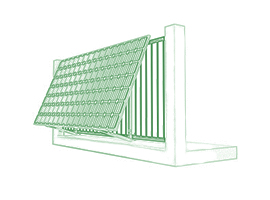
Flat roof solar mounting systems offer robust support and easy installation for solar panels on flat roofs. These systems ensure maximum energy capture, durability, and cost-efficiency, making them ideal for residential and commercial properties. Corigy flat roof solar panel mounting system, such as ballast mount, east-west ballast mount, etc. Contact us to learn more!
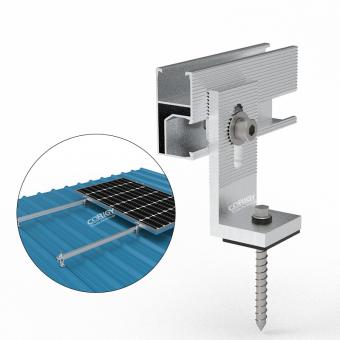
Install solar panel on the metal roof by standing seam, klip-lok, L foot or other clamps.
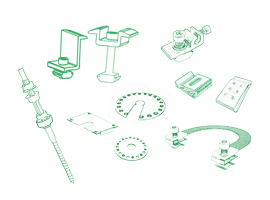
Solar mounting accessories such as end/mid clamp, cable clip, grounding items, etc.

CORIGY SOLAR, 15 years experience of research, manufacture and sale of solar energy system. We are always trying to provide the best support for you, including fast response, cost, QC, design, distributor support.
Phone
0086-592-6883200Location
No.893,Haicang Avenue,Haicang District,Xiamen City,China.

 IPv6 network supported
 English
 español
 한국의
한국의