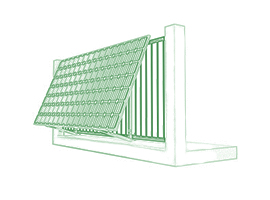
On the premise that the solar mounting solution and factory machining accuracy comply with specifications, with no drawing or production errors, misaligned component holes during on-site installation stem entirely from 4 stages after factory delivery: transportation & storage, foundation construction, on-site installation, and environmental thermal stress.
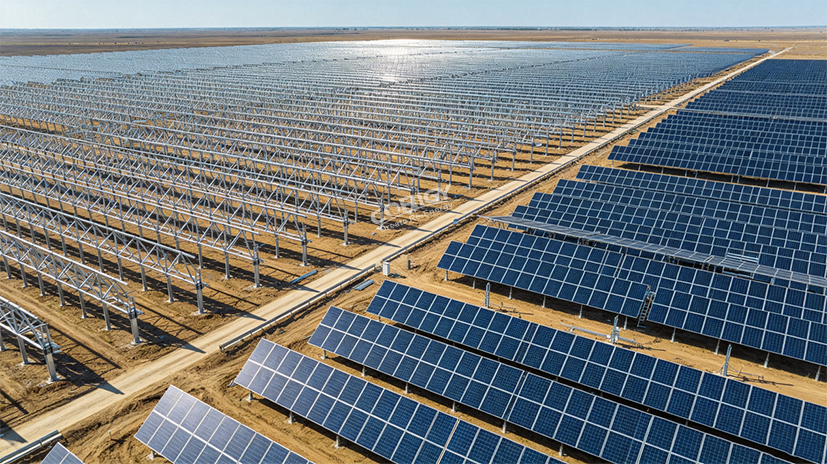
The specific causes are as follows:
1. Component Deformation during Transportation and Storage
Holes are qualified at factory, yet components deform and holes become misaligned upon arrival. Support components finished in the factory have precise hole dimensions. However, long-span steel structures such as main beams, purlins and rails possess limited stiffness. They are prone to plastic deformation under external forces, resulting in relative displacement of bolt holes.
2. Deviations in PV Foundation Construction
This is the primary indirect cause and is often misjudged as a component defect. The support components themselves have accurate hole positions, yet out-of-tolerance foundation positioning, elevation and verticality directly lead to hole misalignment after supports are placed in position. It is the most frequent root cause on site:
Horizontal offset of pile foundation: Helical piles and precast concrete piles are not constructed according to layout marks, causing overall axis deviation. This shifts the installation reference for support main beams and rails, and bolt holes between spans fail to align.
Excessive deviation of pile top elevation: Uneven heights of front, rear, left and right piles tilt and twist the whole steel ground mount solar pv, leading to staggered edges and alignment errors of bolt holes.
Excessive vertical deviation of piles: Inclined piles deform the supports under load after placement, indirectly causing hole misalignment.
Cumulative errors in foundation layout: Segmented layout without a unified reference accumulates deviations after multi-span supports are assembled, resulting in hole offset at the far end.
3. Non-standard On-site Installation Works
Human-induced component deformation and hole-position deviation. Improper on-site construction operations alter the geometry of pv mounting support components and installation references, triggering hole misalignment.
4. Deformation Deviation Induced by Environmental Thermal Stress
The thermal expansion and contraction property of steel ground mounted solar affects assembly accuracy of long-span supports and causes abnormal hole alignment. PV supports are mostly ultra-long assembled structures subject to large diurnal temperature variation and temperature difference between morning and afternoon. If all bolts are fully tightened under high temperature, massive internal stress will be generated when components contract at low temperature, leading to bending and torsional deformation. Conversely, if bolts are fully tightened at low temperature, components will be squeezed and deformed when expanding under high temperature, ultimately causing bolt hole misalignment and poor fitting.
This is a typical environment-induced deviation when no design or manufacturing mistakes exist.
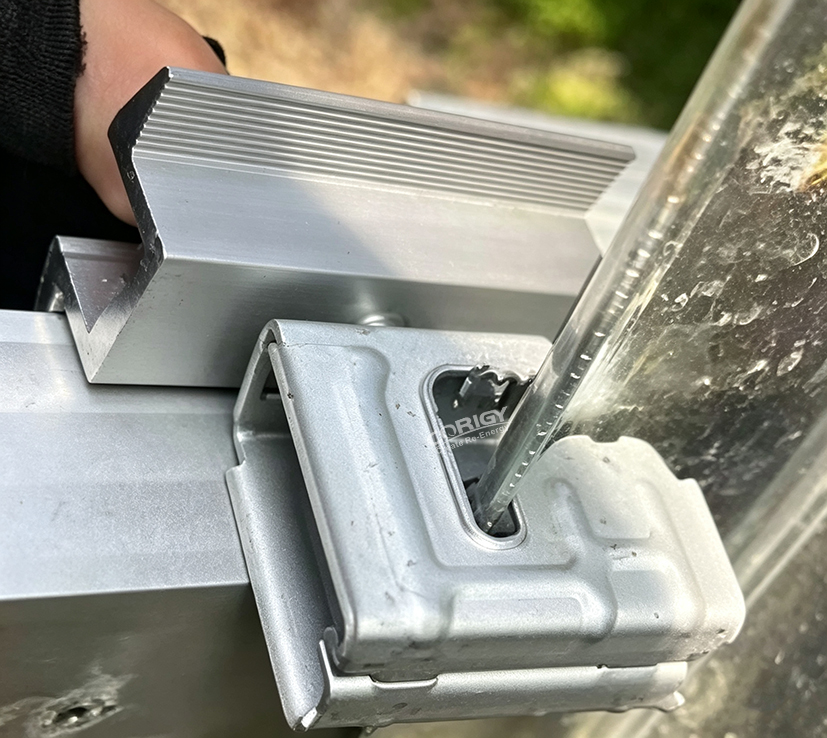
Occasional hole misalignment cannot be completely avoided. A professional hand-held puncher can be used for on-site hole drilling during installation.
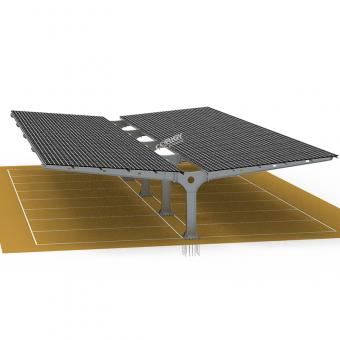
There is an innovative solar panel structure that enables PV modules to be mounted at any position along the rail. It adopts special connecting clips used together with mid-clamps and end-clamps, so that PV modules can be secured anywhere on the rail.
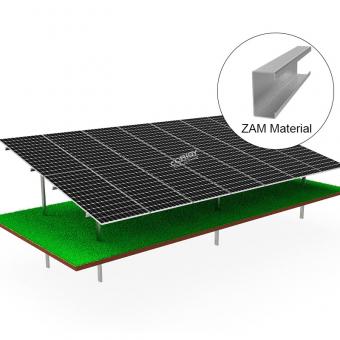
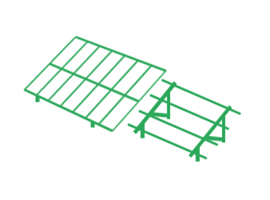
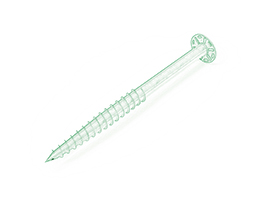
Corigy Solar Ground Mounting Racking System Structure is widely applied for landfll, open space or sloping terrain, etc, Diferent kinds of material can be offered for any needs, such as galvanized steel, anodized aluminum and ZAM materials.
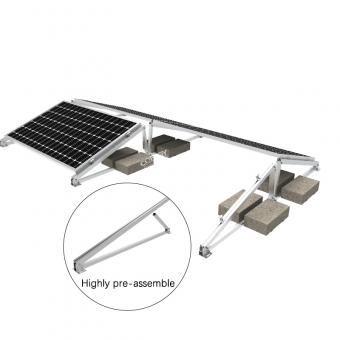
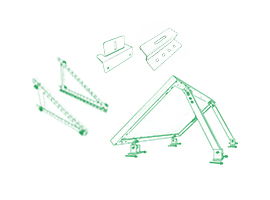
Flat roof solar mounting systems offer robust support and easy installation for solar panels on flat roofs. These systems ensure maximum energy capture, durability, and cost-efficiency, making them ideal for residential and commercial properties. Corigy flat roof solar panel mounting system, such as ballast mount, east-west ballast mount, etc. Contact us to learn more!
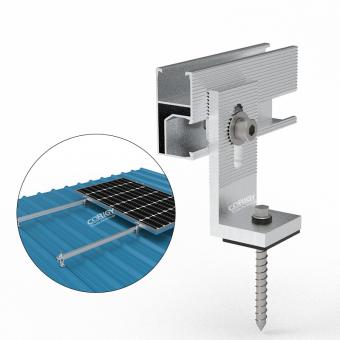
Install solar panel on the metal roof by standing seam, klip-lok, L foot or other clamps.
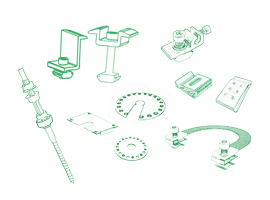
Solar mounting accessories such as end/mid clamp, cable clip, grounding items, etc.

CORIGY SOLAR, 15 years experience of research, manufacture and sale of solar energy system. We are always trying to provide the best support for you, including fast response, cost, QC, design, distributor support.
Phone
0086-592-6883200Location
No.893,Haicang Avenue,Haicang District,Xiamen City,China.

 IPv6 network supported
 English
 español
 한국의
한국의