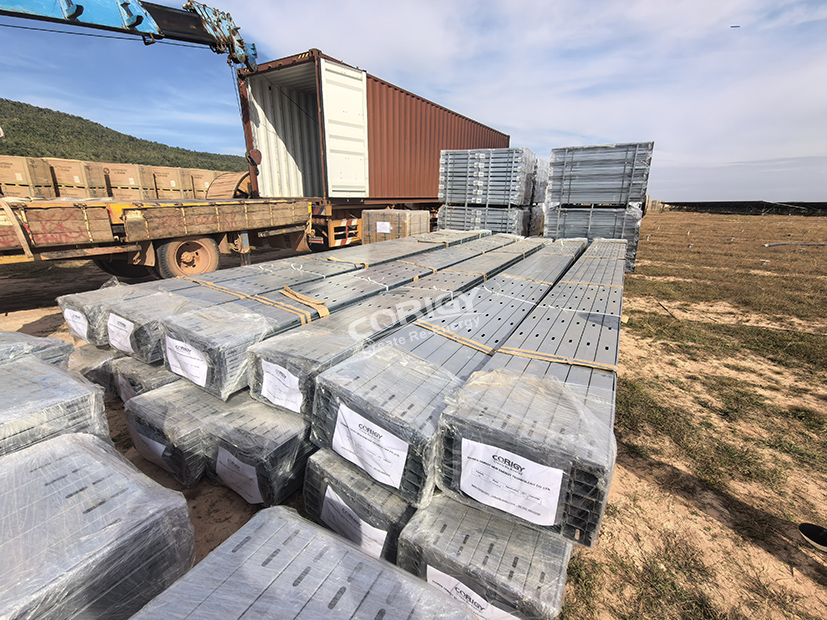
Corigy's hot-dip galvanized solar panel on ground photovoltaic brackets have a broad customer base and can be customized to meet specific needs. This material offers excellent corrosion resistance, with customers typically requiring a C4 or C5 rating to create an 85-micron or 100-micron hot-dip galvanized layer. These brackets are commonly used in projects in coastal areas and alkaline soil regions. Corigy adheres to stringent quality standards! Therefore, its hot-dip galvanized solar panel on ground photovoltaic brackets are suitable for long-term outdoor use; they offer flexible layout, easy installation, and excellent load-bearing capacity and wind resistance! CORIGY SOLAR more professional and flexible solar mounting solutions waiting for you here! CONTACT US! Above news from CORIGY SOLAR Sales & Marketing department Phone: +0086-592-6883200 E-mail: sales@corigy.com
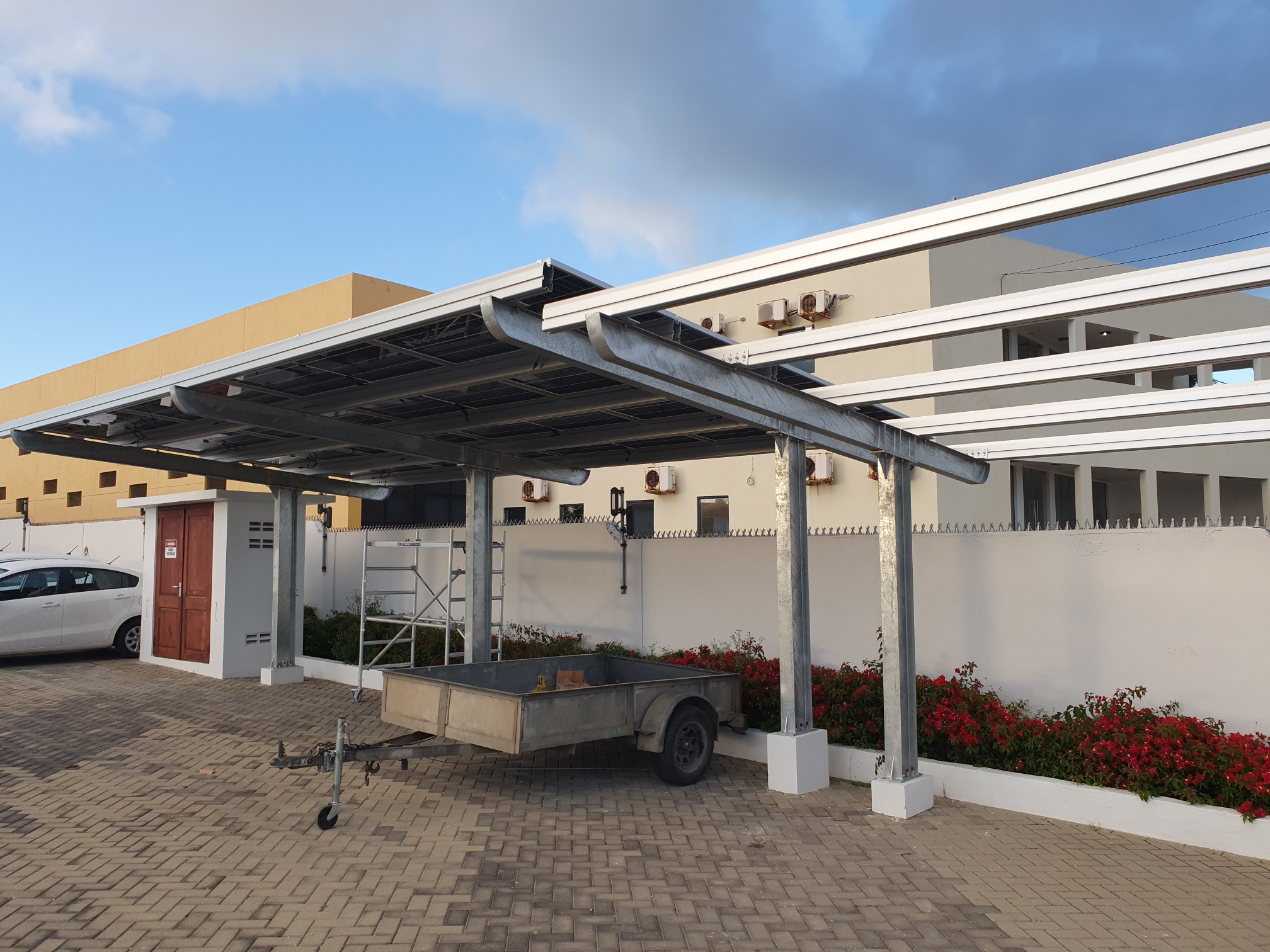
Read MoreLast week, one of our clients from Aruba asked an interesting question: "Should our solar carport use Q275 steel and SUS316 stainless steel because Aruba is an island?" It's a great question, and one that many project owners ask when designing solar carports in coastal environments. Here is our recommendation. 1. Structural Steel: Why Q235B Is Still the Industry Standard For most solar carport structures, the industry standard is to use Q235B carbon steel for columns and beams, protected by hot-dip galvanizing. While many suppliers provide a zinc coating of around 65 μm, our standard specification is at least 80 μm, and for highly corrosive coastal or island environments such as Aruba, we generally recommend increasing the coating thickness to 100 μm or more whenever the project budget allows. Many customers also ask whether Q275 steel is a better choice. In practice, the answer is not necessarily. Compared with Q235B, Q275 offers higher yield strength, but for most solar carport designs this additional strength provides very limited practical benefit. Structural performance is usually governed by the engineering design rather than simply selecting a higher-strength steel grade. Of course, Q275 can be supplied when required, but it is typically a customized solution and usually requires larger production quantities. 2. Rails: Why We Prefer S350GD + ZAM275 For roll-formed components such as solar rails that do not require welding, we normally recommend S350GD steel with ZAM275 (Zinc-Aluminium-Magnesium) coating. Compared with conventional galvanized steel, ZAM offers several advantages: · Excellent corrosion resistance ·Outstanding cut-edge self-healing performance · A smoother and more attractive surface finish These characteristics make it an ideal choice for long-term outdoor solar applications. 3. Fasteners: SUS304 or SUS316? Fasteners are often overlooked, but they play an important role in long-term reliability. For island or coastal projects like Aruba, SUS316 stainless steel is generally recommended whenever the budget permits, as it provides better resistance to chloride corrosion than SUS304. 4. Should the Entire Carport Be Made of SUS316? Another question we often receive is: "Can the entire solar carport be manufactured from SUS316 stainless steel?" Technically, yes. However, from an engineering and commercial perspective, it is usually not the most cost-effective solution. Using SUS316 for the entire structure significantly increases material costs, while the improvement in structural performance is relatively small. In most projects, the additional investment does not translate into proportional long-term value. Our Recommended Material Combination After evaluating structural performance, corrosion resistance, service life and project cost, we typically recommend the following combination: • Columns & Beams: Q235B carbon steel with hot-dip galvanizing (≥80 μm, preferably ≥100 μm for coastal environments) • Solar Rails: S350GD + Z...
Read MoreThe Dragon Boat Festival is one of the most cherished traditions in Chinese culture – a time for family reunions, honoring history, and sharing good food. This year, we continued a tradition of our own – preparing thoughtful holiday gifts for every employee. From classic Zongzi to curated festive hampers, each gift was carefully chosen to bring a taste of home and a moment of joy to our team members and their families. To our partners and friends: from all of us at Corigy Solar, we wish you a very happy Dragon Boat Festival. May your holiday be as sweet as red bean paste and as warm as a family reunion. We will accept orders as usual during the holiday. If you have a need of solar mounting racks, please feel free to contact us. CORIGY SOLAR more professional and flexible solar mounting solutions waiting for you here! CONTACT US! Above news from CORIGY SOLAR Sales & Marketing department Phone: +0086-592-6883200 E-mail: sales@corigy.com
Read MoreWith the peak season approaching, factory orders are surging. If you have any upcoming needs or projects of solar mounts in the pipeline, now is the time to act. Don't wait until it's too late – secure your orders while we still have availability. CORIGY SOLAR more professional and flexible solar mounting solutions waiting for you here! CONTACT US! Above news from CORIGY SOLAR Sales & Marketing department Phone: +0086-592-6883200 E-mail: sales@corigy.com
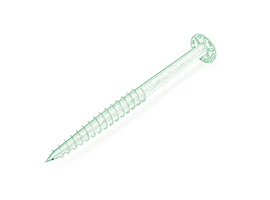
Read MoreRecently, a client from Thailand asked an interesting question during our discussion about solar mounting systems “How thick should the galvanization and pipe wall of a ground screw be to ensure a long service life?” This is actually a very important topic for solar ground mounting projects, especially in regions with different soil conditions and climates. Here are a few key factors that determine the durability of solar ground screws. 1. Hot-Dip Galvanization Thickness For solar mounting ground screws, hot-dip galvanization is essential to prevent corrosion. Typical standards in the industry: ≥ 80 μm – Standard protection for most normal environments ≥ 100 μm – Recommended for coastal or humid areas ≥ 120 μm – Suitable for highly corrosive environments In general, 80–100 μm galvanization can provide 25–40 years (or even longer) of corrosion protection under normal soil conditions. However, the actual lifespan also depends heavily on soil chemistry and drainage conditions. 2. Pipe Wall Thickness of the Ground Screw The wall thickness of the steel pipe affects both structural strength and long-term durability. Common specifications used in solar projects is diameter typical wall Thickness60 mm2.5–3.5 mm76 mm3.0–4.0 mm89 mm3.5–4.5 mm For large solar plants or areas with high wind loads, thicker walls are usually recommended. 3. Soil Conditions Matter The soil environment can significantly influence corrosion speed. Normal soil (neutral pH) : Standard galvanization usually works well. Clay or wet soil: Higher galvanization thickness recommended. Salty or coastal soil : Thicker galvanization + larger safety factor. Rocky soil : Focus more on structural strength than corrosion. 4. Installation and Drainage Even a well-designed ground screw can fail prematurely if installation conditions are poor. Key recommendations is ● Avoid long-term water accumulation. ● Ensure proper drainage around the foundation. ● Select the correct screw length based on soil conditions. ● Follow installation torque recommendations. 5. Why Ground Screws Are Widely Used in Solar Projects Compared with traditional concrete foundations, ground screws offer several advantages: ● Faster installation. ● No concrete curing time. ● Environmentally friendly. ● Easy removal and recycling. ● Suitable for most soil types. This is why they are increasingly popular in utility-scale solar farms and commercial PV installations. The service life of a solar ground screw is not determined by a single factor. It depends on galvanization thickness, pipe wall thickness, soil conditions, and proper installation.In our recent solar projects, we typically recommend 80–100μm hot-dip galvanization for ground screws, depending on the soil environment and project lifetime requirements.Proper material selection and corrosion protection are essential to ensure that the foundation can match the 25+ year lifespan of a solar power plant. Feel Free to contact us if you want to have your suitable ground screw. ...
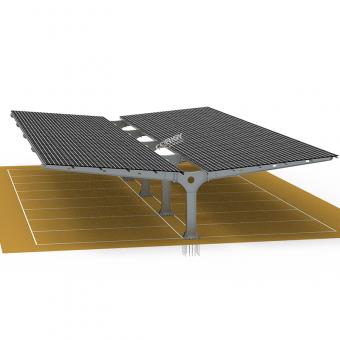
Read MoreCorigy is an outstanding manufacturer of photovoltaic mounting structures.It boasts an elite engineering and design team. From the selection of solar mounting solutions to detailed drawing design, we fully take into account factors such as cost efficiency, structural safety, and ease of installation of solar mounting for our customers. While ensuring the structural safety of the mounting system, Corigy strives to provide customers with the most cost-effective solar mounting solutions. Even more commendably, our engineer usually gives some professional suggestions on safety of the solar mounting structures, these suggestions are so valuable and indispensable for a project. We have a successful case of hot-dop galvanizing solar mounting where we helped a customer to reduce the mounting costs from $90/KW to $45/KW. In the customer’s original design, many rectangular tubes were used for diagonal bracings and beams. Our engineers simplified the design by adopting Cee steel for beams and diagonal bracings, significantly cutting costs. As the labor cost in the country is very expensive, so we suggested customer to use foundation of piles ramming into the ground. The type of piles in this project are U steel instead of normal Cee steel. This is because the maximum thickness of Cee steel is not more than 3 mm. But 3 mm thickness Cee steel can not withstand the impacting force generated from large pile driver machine, so we used U shape steel with thickness from 6-8 mm. We suggested customer to use Lock Nut for the bolts in one special part, as there is a small gap between two U shape steel, so there is no friction here. The screws in this part are prone to loosening and falling off under the gravity of the panels and wind speed over time. If the screws get loosening or falling off, the solar mounting structure won't be stable. So our engineer suggested to use the lock nut. This kind of nut is embedded with a nylon ring; when the bolt is screwed in, the nylon deforms under compression, gripping the threads to provide constant friction. We are very happy that customer accepted all of our suggestions. Order is under processing now. Except this case , we also provide customers with pre-assembled components to improve on-site installation efficiency and lower labor costs. Our extensive product range: We manufacture mounting systems for ground-mounted, rooftop, and carport solar installations. We do both aluminum and hot-dip galvanized steel ground mounting, metal sheet roof and flat roof. Our carport design Corigy offers two designs for solar carports: the Y-type carport and the single-column carport. Both types combine practicality with an attractive appearance. Corigy designs the carport structure in accordance with the customer’s requirements, including maximum wind speed, snow load, and panel dimensions. The primary material is hot-dip galvanized Q235B steel. Each parking space generally has a width of 3 meters and a depth of 5 meters. We can also de...
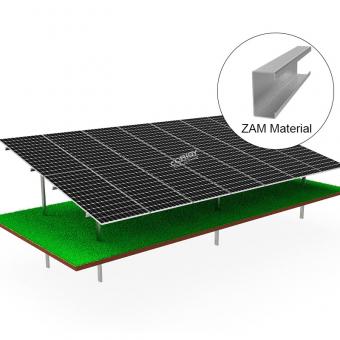
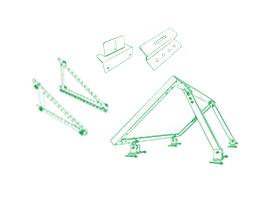
Read MoreCorigy Solar Ground Mounting Racking System Structure is widely applied for landfll, open space or sloping terrain, etc, Diferent kinds of material can be offered for any needs, such as galvanized steel, anodized aluminum and ZAM materials.
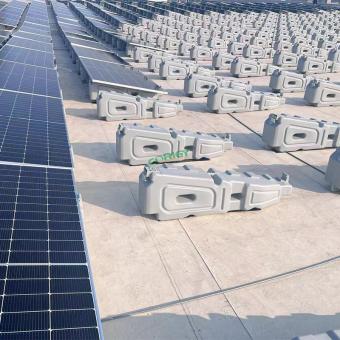
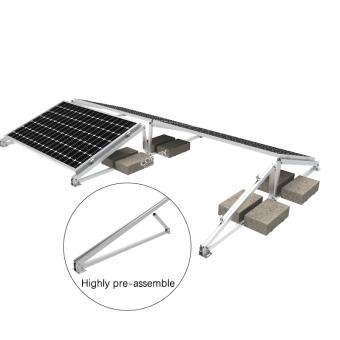
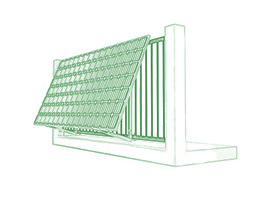
Flat roof solar mounting systems offer robust support and easy installation for solar panels on flat roofs. These systems ensure maximum energy capture, durability, and cost-efficiency, making them ideal for residential and commercial properties. Corigy flat roof solar panel mounting system, such as ballast mount, east-west ballast mount, etc. Contact us to learn more!
Install solar panel on the metal roof by standing seam, klip-lok, L foot or other clamps.
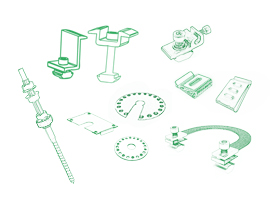
Solar mounting accessories such as end/mid clamp, cable clip, grounding items, etc.

CORIGY SOLAR, 15 years experience of research, manufacture and sale of solar energy system. We are always trying to provide the best support for you, including fast response, cost, QC, design, distributor support.
Phone
0086-592-6883200Location
No.893,Haicang Avenue,Haicang District,Xiamen City,China.

 IPv6 network supported
 English
 español
 한국의