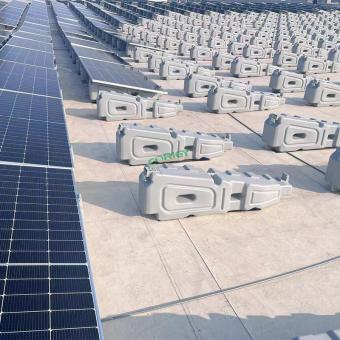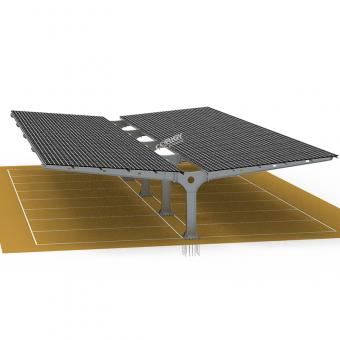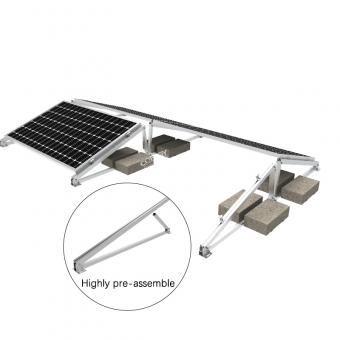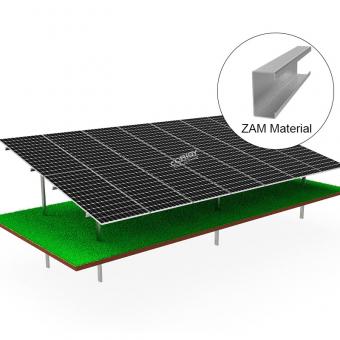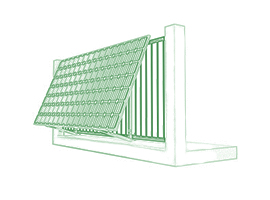
In the construction of photovoltaic power stations, solar panel structure are often likened to the "skeletal system" of the station. Although they account for only 12%-18% of the initial investment, they directly determine the station's life-cycle and power generation efficiency. For ground-mounted photovoltaic power stations, there are often multiple options to choose. Before making the final decision, we need to know---what factors influence the selection of ground solar support?
Overall, the selection of ground solar panel structure is mainly influenced by external environmental factors and structural design factors.
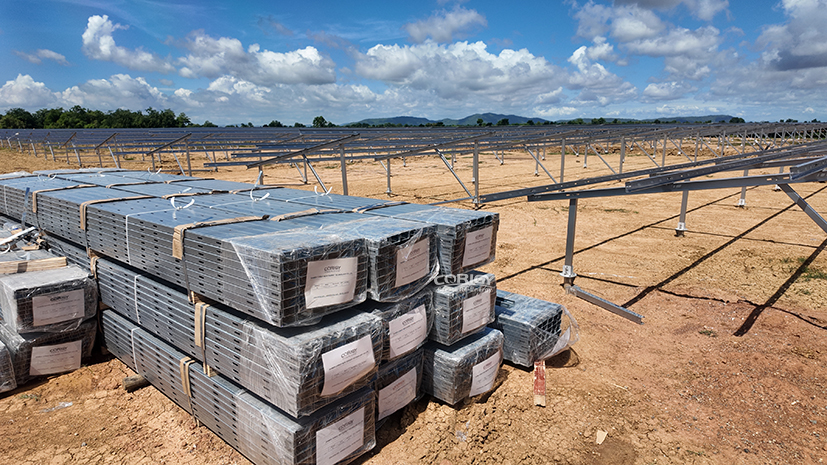
External environmental factors
External environmental factors are mainly influenced by two parts: the geological conditions of the installation site and natural environmental factors.
(1) Geological conditions of the site:
a. Soil type: Soil directly determines the engineering properties of the solar panel foundation. Sandy soil has good drainage, but may require deeper piles; while rock, clay, or corrosive soil requires specialized equipment, pre-drilling, or heavier concrete ballast to prevent movement. The bearing capacity of different soils varies greatly and requires professional evaluation before deciding on the type of solar panel foundation.
b. Underground conditions: such as the height of the groundwater level, the presence of isolated rocks, pipelines, frozen soil, etc. If there is a frozen soil area, the foundation must be buried below the frost depth line.
c. Slope and terrain: Flat ground minimizes construction and labor costs to the greatest extent possible. When the slope is large, the height difference of the support column increases, and it is necessary to make adaptive adjustments, otherwise the components will not be horizontal and the structure will be subjected to uneven stress.
(2) Environmental factors
a. Wind load: For ground power stations, especially open and flat land, plateau and mudflat, wind is the primary cause of support damage.
b. Snow load: In high-altitude areas, the weight of snow is heavy, and snow slip and uneven snow accumulation can cause local overload; The melting and freezing of snow will also bring additional loads. So areas with heavy snow require sturdy structures and optimized tilt angles.
c. Earthquake: In areas with high seismic intensity, support foundations and connectors must meet seismic resistance requirements to prevent support overturning and anchor bolt breakage.
d. Corrosive environment: In coastal areas, it is necessary to consider the issue of salt spray corrosion, which can weaken the strength of the support and shorten its lifespan. However, mining areas/farmland have issues with ammonia and acidic soil; In humid areas, it is also necessary to consider the impact of mold and water vapor on bracket corrosion.
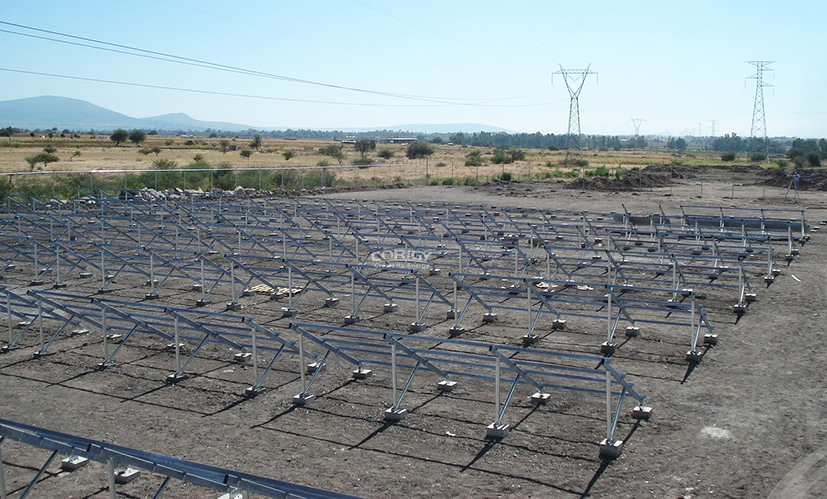
Structural design factors
The structure and design need to consider the annual power generation rate and mounting bracket costs, which are mainly influenced by the following five aspects:
(1) Material selection
a. Aluminum alloy: It has the advantages of light weight, beauty, and good corrosion resistance, but its strength is lower than that of steel and its cost is also higher;
b. Hot-dip galvanized steel/zinc aluminum magnesium steel: It has the advantages of high strength and low price, and anti-corrosion depends on the galvanized layer. However, in coastal environments, a thicker zinc layer is required.
(2) Pv module specifications
The size, weight, and arrangement of modules (number per ground mounted pv arrays) directly determine the support load. Larger modules require higher stiffness for the crossbeam.
(3) Tilt angle and orientation
The tilt angle directly affects the power generation and changes the direction of force on the bracket; The orientation affects the arrangement of components, which in turn affects the windproof area.
(4) The height of the structure above the ground
The ground clearance height of the ordinary scheme is generally 500mm, but in areas with high snow loads, it is necessary to increase the height of the support. Increasing the ground clearance height will amplify the wind overturning moment, increase the slenderness ratio of the column, and increase the cost of the support.
(5) Solar mounting solution style
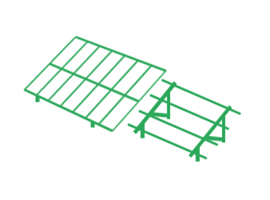
There are many styles of solar mounting structures, such as fixed brackets, adjustable brackets, and tracking brackets (single axis/double axis), and the stress on different brackets varies greatly. Fixed bracket subdivision includes single column bracket, double column bracket, etc. The dynamic wind load of the tracking bracket is much higher than that of the fixed bracket, with higher structural design requirements and higher maintenance costs in the later stage.
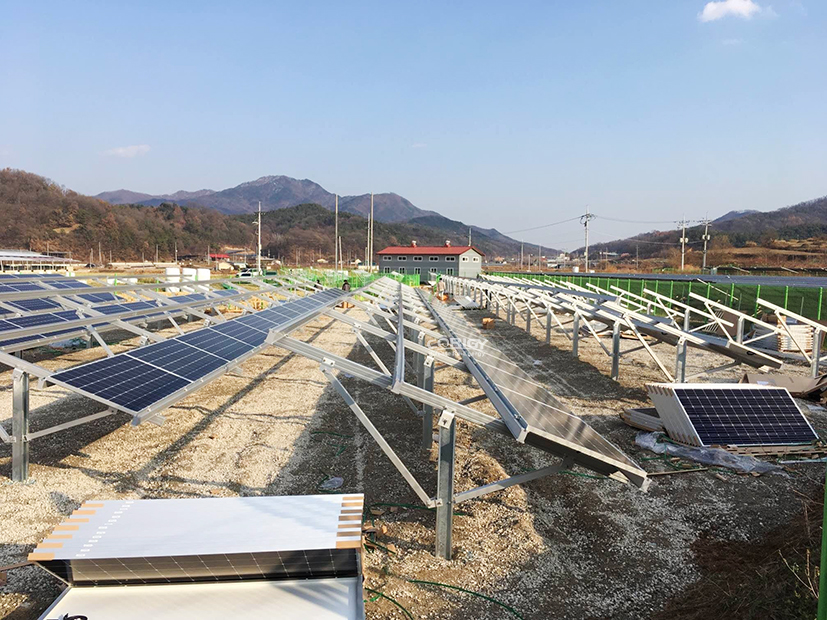
CORIGY has over 12 years of experience in providing solutions for fixed ground solar mounting systems and can design suitable installation plans based on budget and site conditions.
Contact CORIGY to learn more about our solar mounting system that is best suited for ground solar solution.
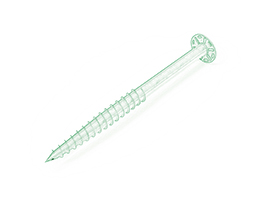
Corigy Solar Ground Mounting Racking System Structure is widely applied for landfll, open space or sloping terrain, etc, Diferent kinds of material can be offered for any needs, such as galvanized steel, anodized aluminum and ZAM materials.
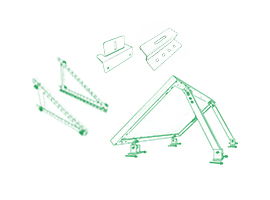
Flat roof solar mounting systems offer robust support and easy installation for solar panels on flat roofs. These systems ensure maximum energy capture, durability, and cost-efficiency, making them ideal for residential and commercial properties. Corigy flat roof solar panel mounting system, such as ballast mount, east-west ballast mount, etc. Contact us to learn more!
Install solar panel on the metal roof by standing seam, klip-lok, L foot or other clamps.
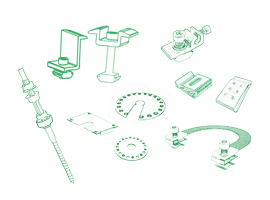
Solar mounting accessories such as end/mid clamp, cable clip, grounding items, etc.

CORIGY SOLAR, 15 years experience of research, manufacture and sale of solar energy system. We are always trying to provide the best support for you, including fast response, cost, QC, design, distributor support.
Phone
0086-592-6883200Location
No.893,Haicang Avenue,Haicang District,Xiamen City,China.

 IPv6 network supported
 English
 español
 한국의
한국의